Case Study – Hull and Proplusion Refurbishment
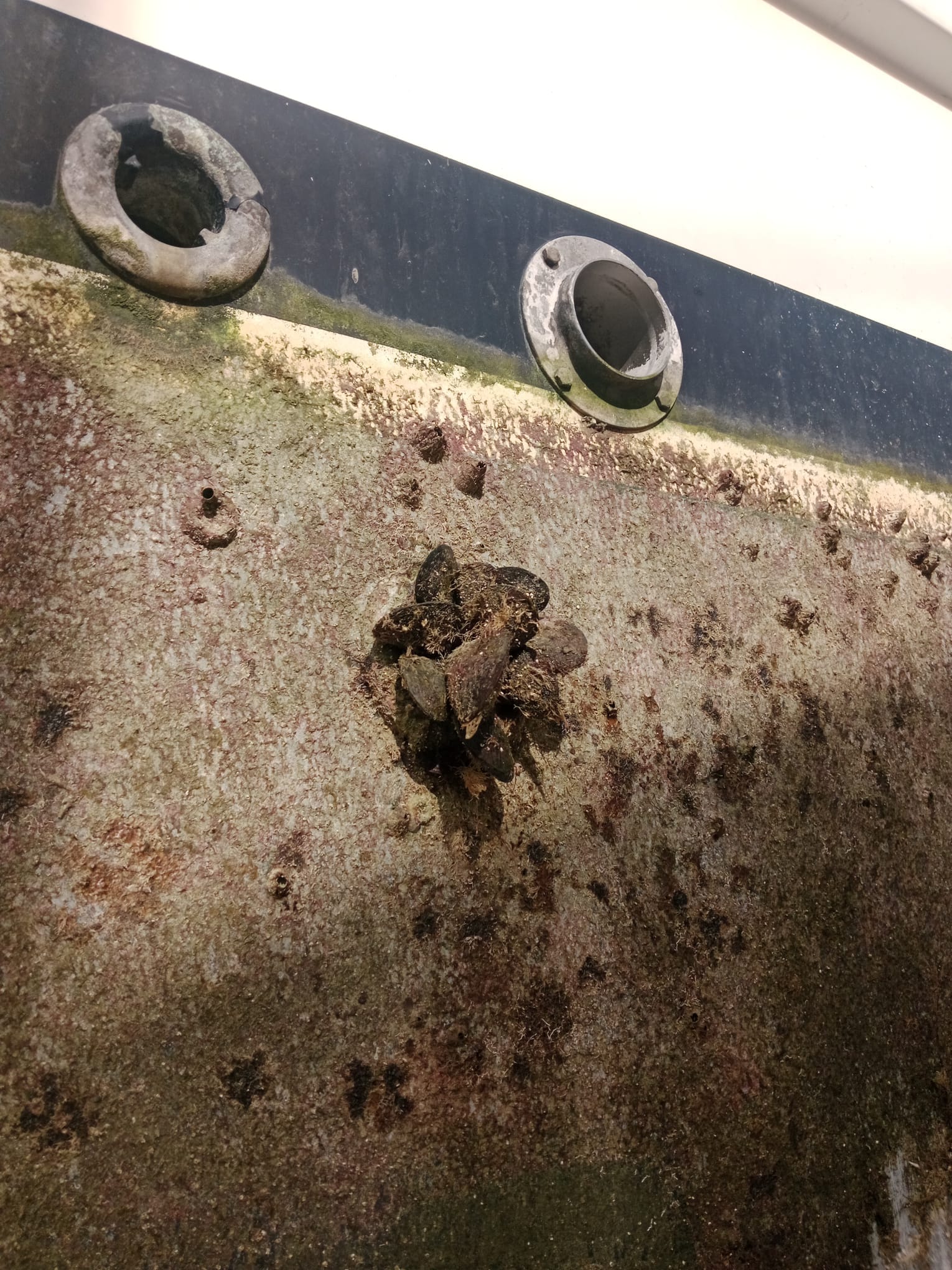
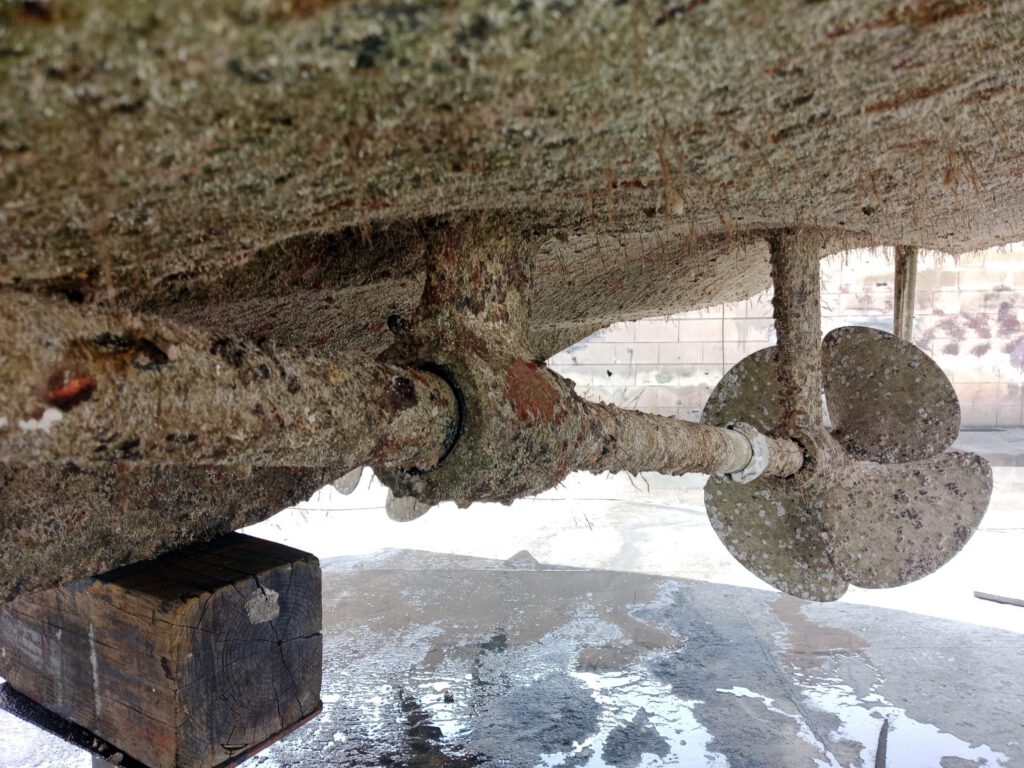
After three years continuously afloat, this motorboat presented a classic but demanding rhull and propulsion refurbishment challenge—one that highlights why proper underwater maintenance is critical to performance, reliability, and long-term asset value.
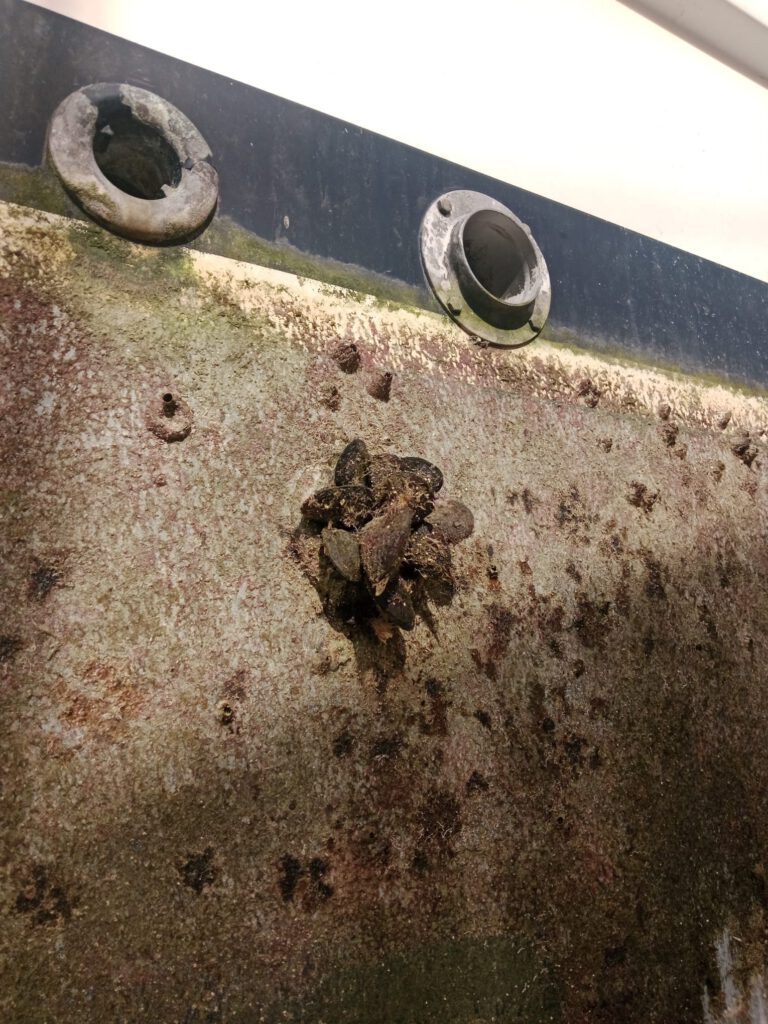
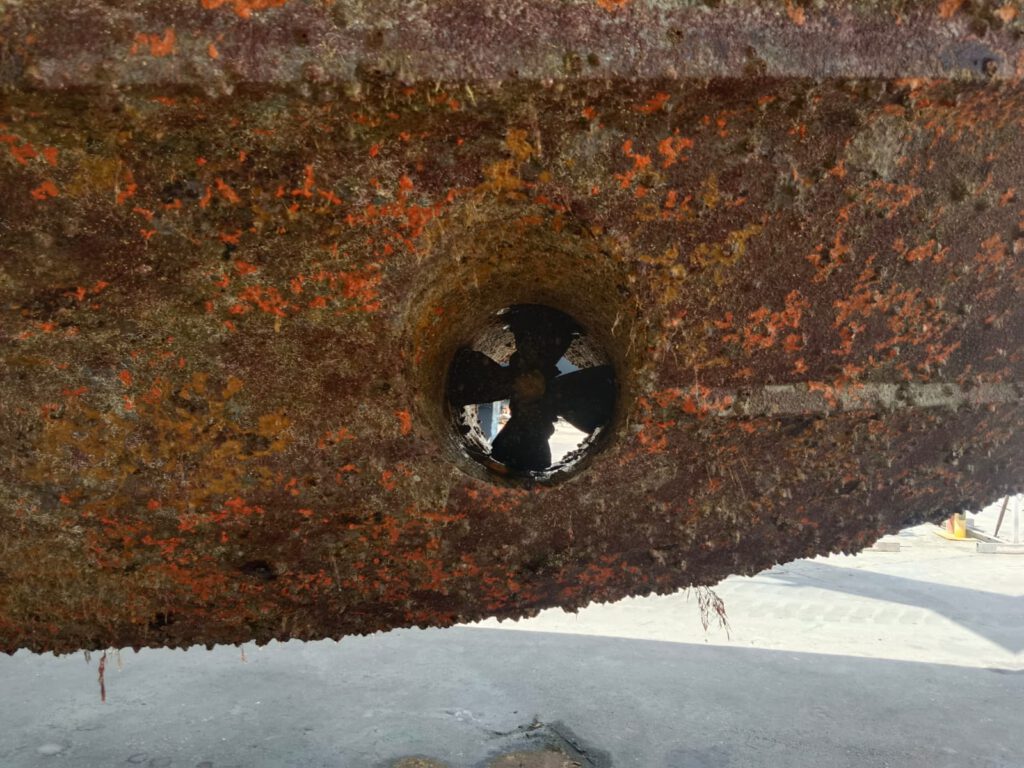
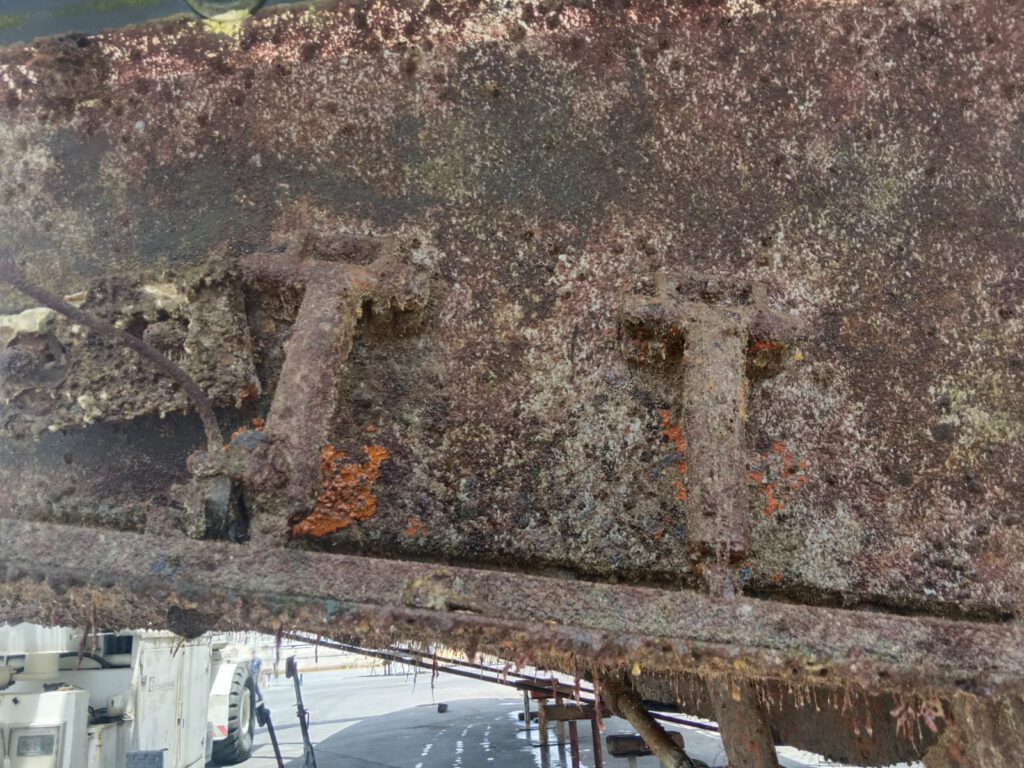
Heavy barnacle encrustation and dense marine weed had significantly increased drag, compromised efficiency, and masked the true condition of the underwater structure and running gear.
The scope of work required a methodical, engineering-led approach rather than cosmetic intervention.
Project Overview
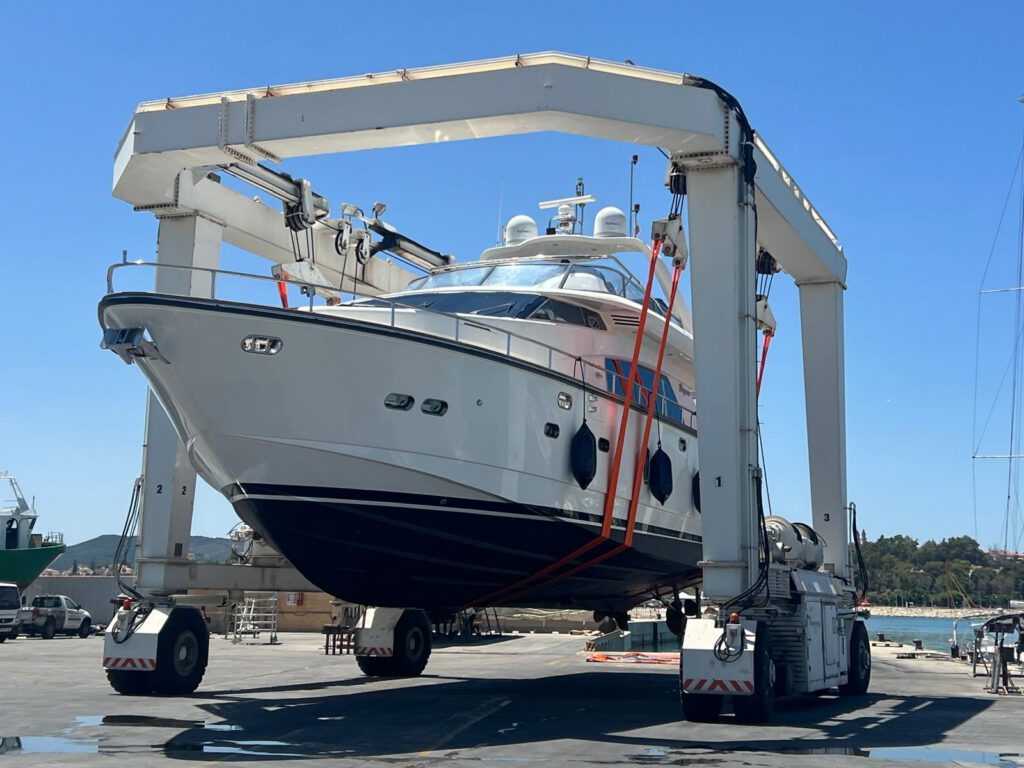
The project began with lifting the vessel to allow for a full underwater inspection to be completed. As expected, the hull was heavily fouled. All marine growth was mechanically removed, exposing the substrate and allowing an honest assessment of the hull condition. The hull was then sanded back, removing degraded coatings and ensuring a sound surface for repair. Any imperfections, minor damage, or surface irregularities were addressed using marine-grade epoxy fillers. This stage is critical: fairing the hull correctly reduces drag, improves fuel efficiency, and ensures coating systems perform as designed.
Hull Actions
Once the hull was properly prepared, an epoxy primer system was used locally to make spot repairs and provide long-term protection against osmosis and water ingress. The hull was then repainted and finished with a fresh antifouling system, applied strictly to manufacturer specifications to maximise effectiveness and longevity. Correct surface preparation and coating compatibility are essential here—shortcuts in this phase often lead to premature failure and increased maintenance costs.
Propulsion
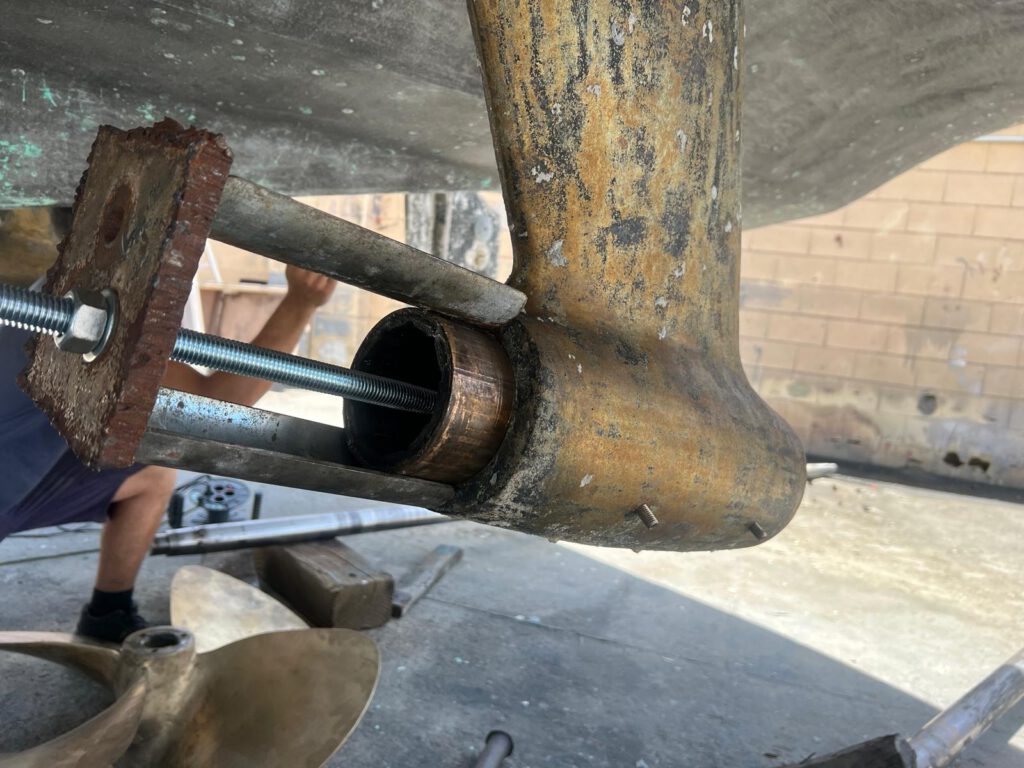
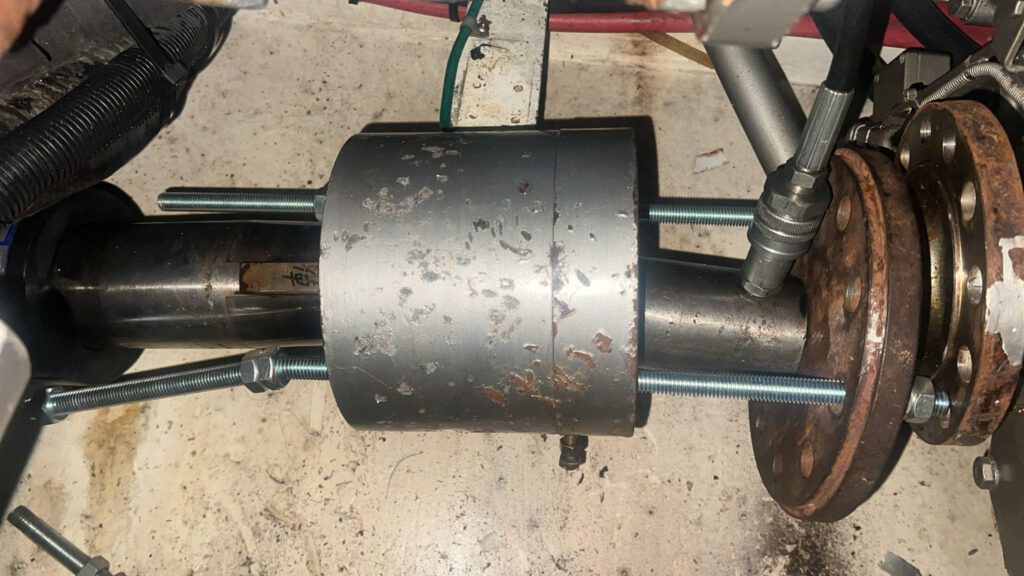
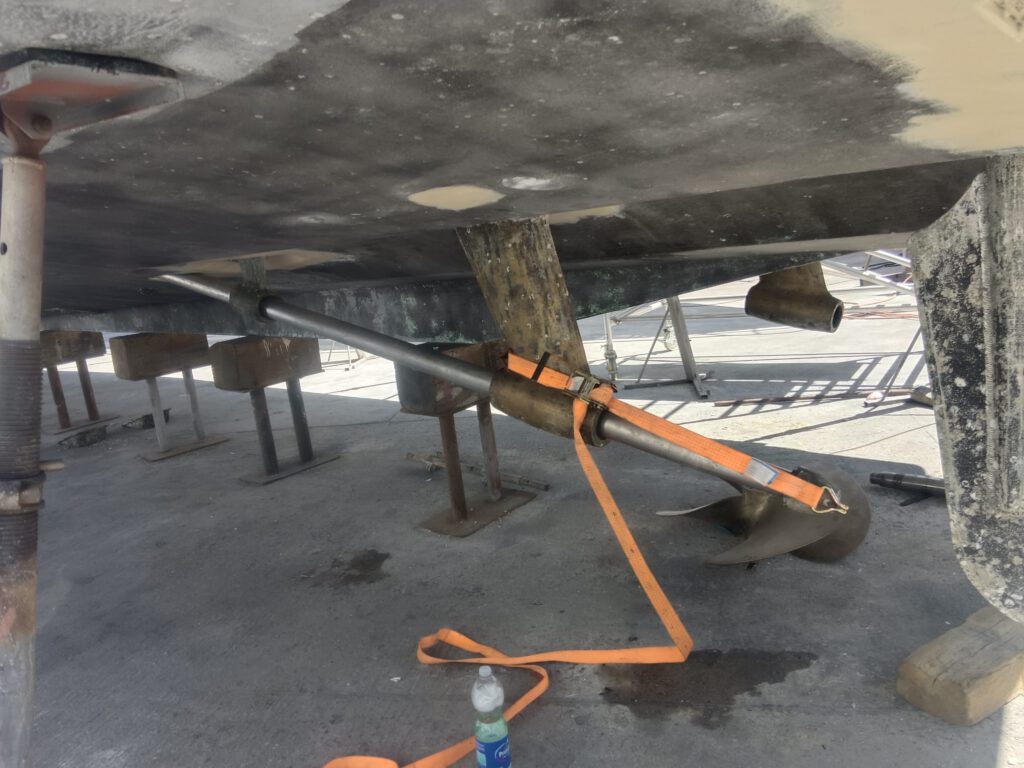
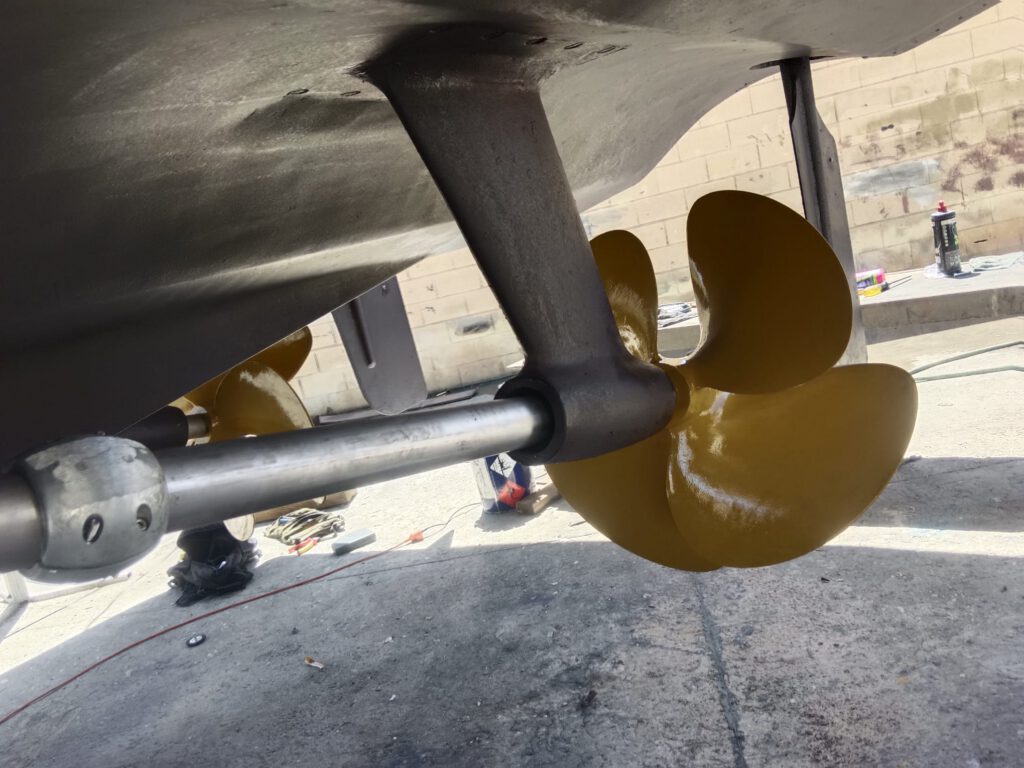
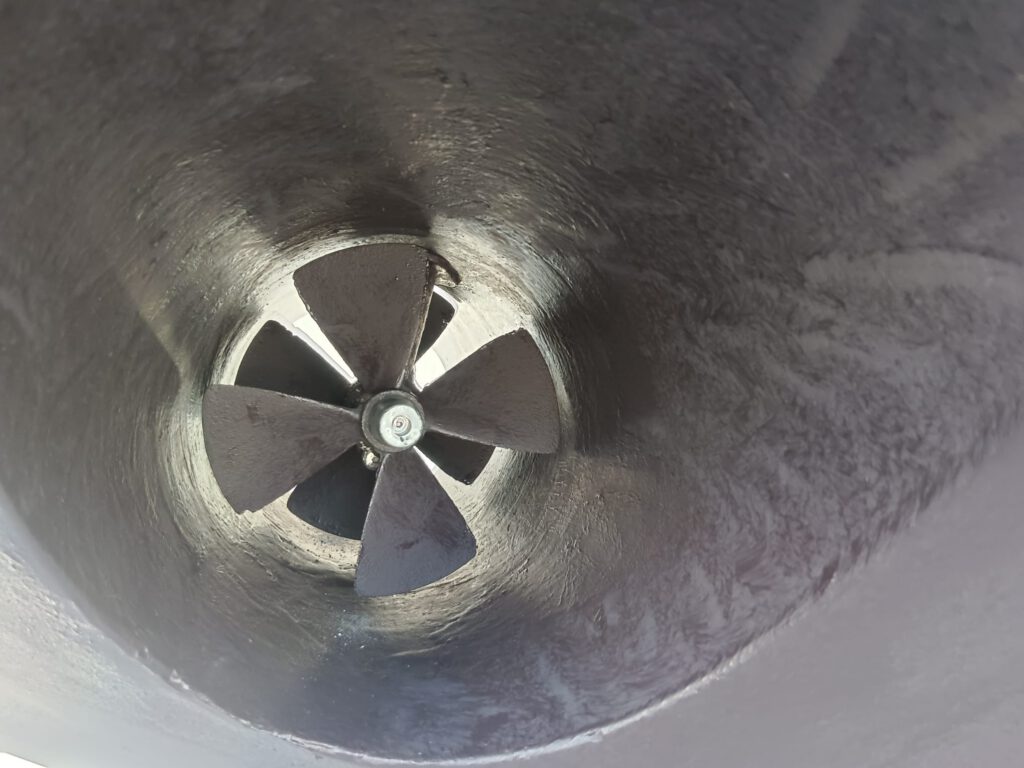
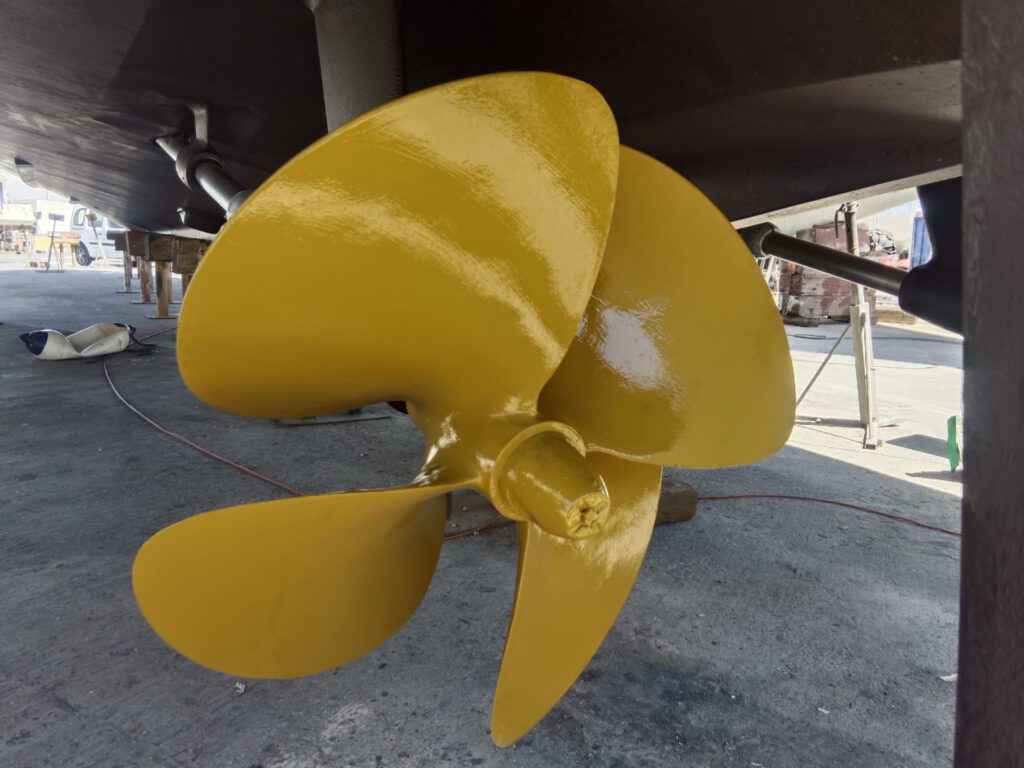
Attention then turned to the propulsion system. The propellers, shafts and shaft couplings were removed to allow full inspection and refurbishment. Cutlass bearings were replaced as a matter of best practice, eliminating any risk of vibration or shaft movement that can cause long-term damage to gearboxes and seals. The shafts were cleaned, inspected, and polished to restore a smooth surface finish, while the propellers were cleaned and polished to optimise hydrodynamic efficiency.
Shafts, Seal And Bearings
New Tides Shaft Seals were installed, replacing the older arrangement and significantly improving reliability while reducing the risk of water ingress. All sacrificial anodes were renewed to ensure effective corrosion protection throughout the underwater metalwork.
Reassembly was carried out with care and precision.
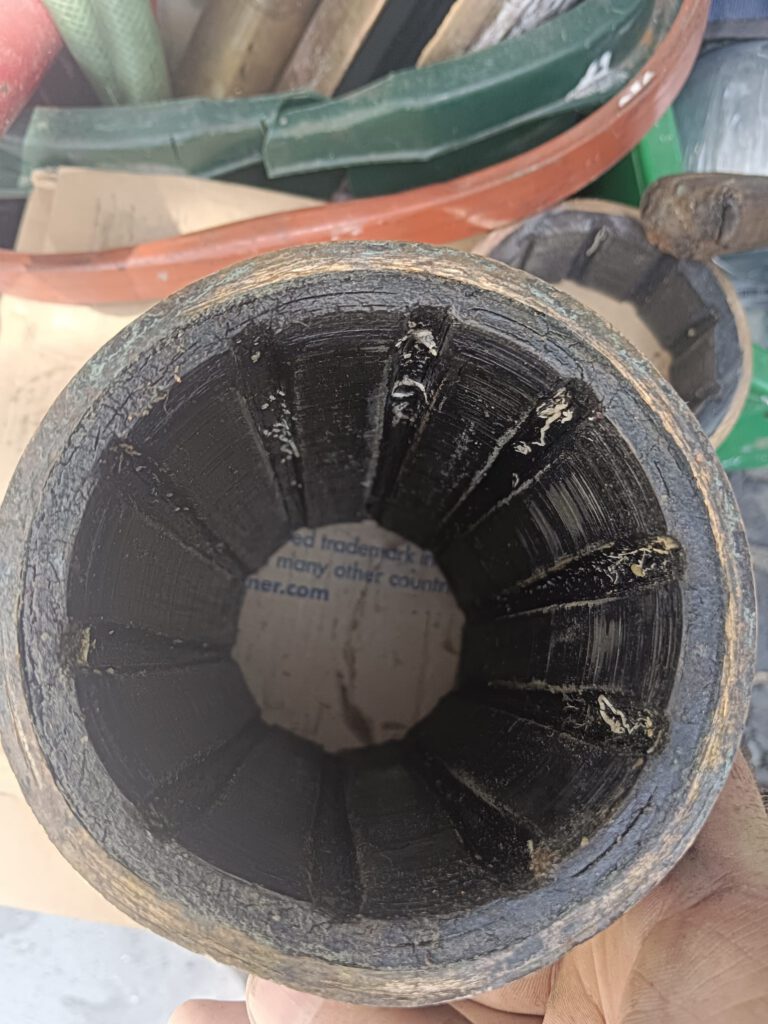
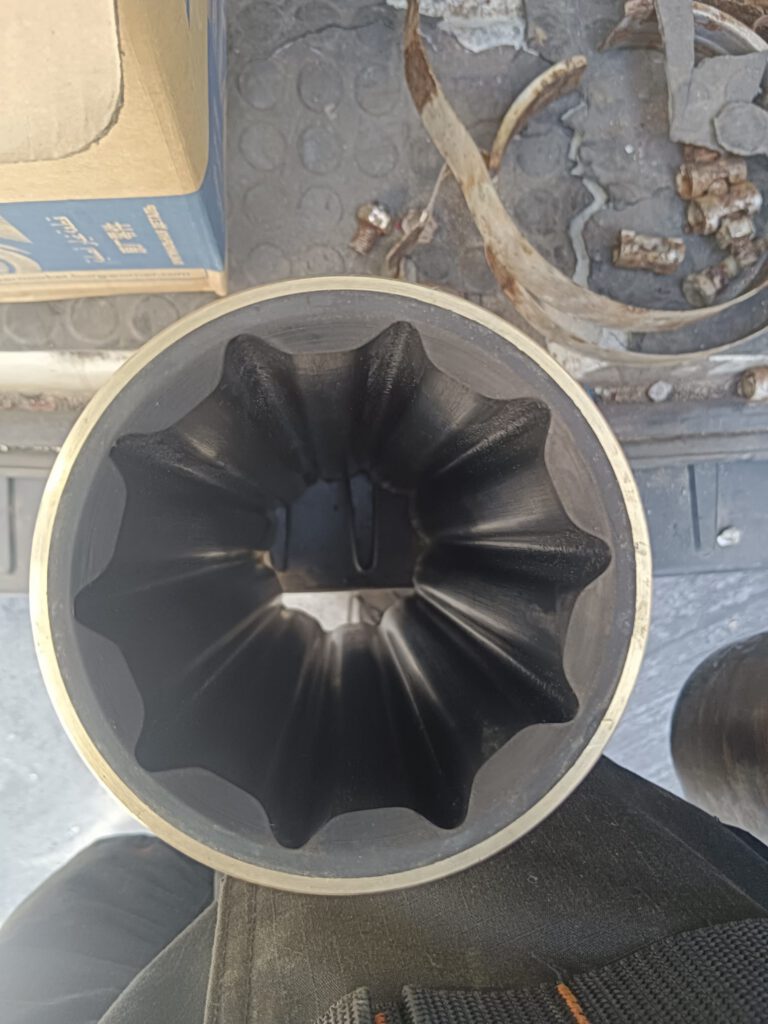
Shafts, couplings, and propellers were aligned, and final checks were made to ensure smooth rotation and correct tolerances. Propeller speeds were reset, and the engine power controls were balanced and synchronised to ensure both engines delivered equal load and response. This step is often overlooked but is vital for smooth operation, reduced drivetrain stress, and optimal performance.
Final Stages
Finally, the vessel was fully polished, completing not just a functional refurbishment but a visual one too. The result is a motorboat that performs as intended—more efficient, smoother running, better protected, and easier to maintain going forward.
This project demonstrates the value of a comprehensive, engineering-focused approach to refurbishment.
By addressing the hull, propulsion, and control systems together, the vessel was not merely cleaned, but genuinely restored—ready for reliable service and improved performance for years to come.
Contact Us if you think your vessel would benefit from our services.